On September 14, 2025, the academic symposium on "Southeast Asian Epic Heritage" was held at Peking University. The symposium was jointly hosted by the Research Center of Eastern Literature, Peking University -- a Key Research Base of Humanities and Social Sciences of the Ministry of Education -- and the School of Foreign Languages, Peking University. It was organized by the research team for the Key Research Base Major Program "Eastern Literature and Mutual Learning among Civilizations: The Translation and Studies of Eastern Epics." Experts and scholars from various universities and research institutions engaged in in-depth discussions focusing on the translation and study of Southeast Asian epics.
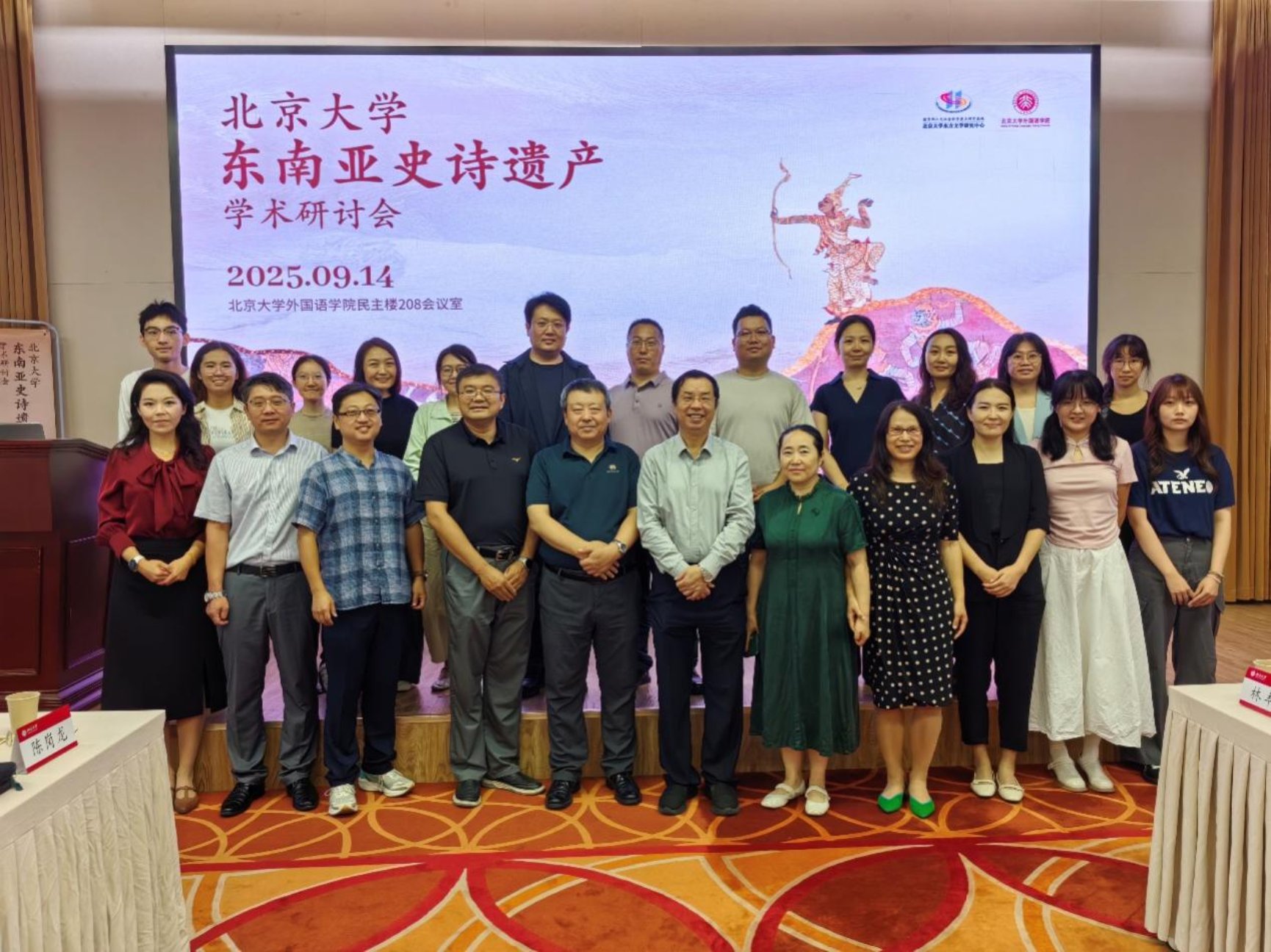
Group Photo of Participating Scholars
The opening ceremony was chaired by Prof. Shi Yang, Tenured Associate Professor and Assistant Director of the Research Center of Eastern Literature, Peking University. Prof. Lin Fengmin, Deputy Director of the Office of Social Sciences at Peking University and Deputy Director of the Research Center of Eastern Literature, delivered the opening address. Prof. Lin pointed out that the long-standing epic traditions of Southeast Asia represent a shared cultural heritage for all humanity. He noted that the study of Southeast Asian epics in China is still in its early stages, making the systematic collation, translation, and research of these epic texts particularly pioneering in this context.
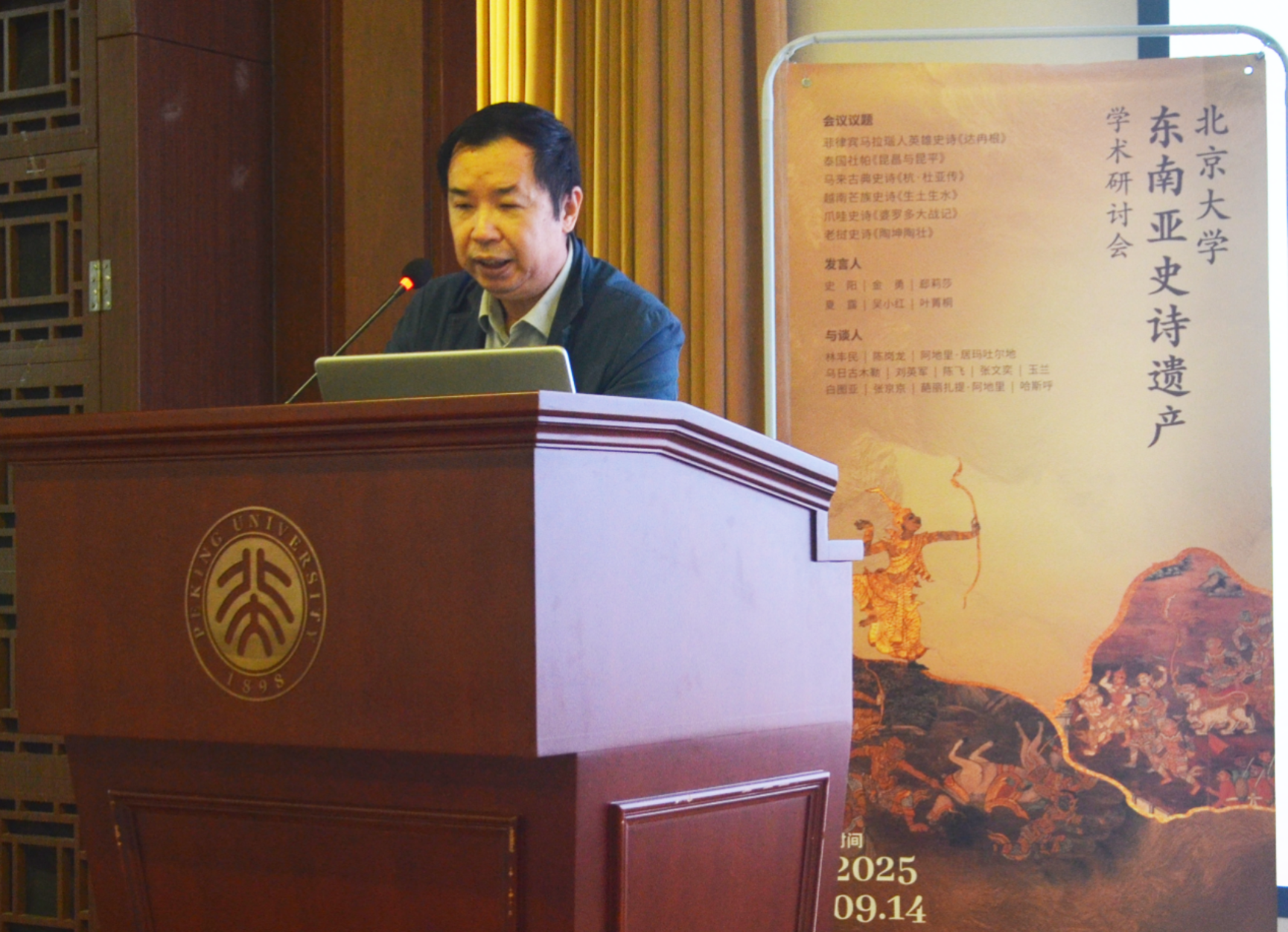
Prof. Lin Fengmin Delivering Opening Remarks
The first session was chaired by Prof. Chen Fei, Tenured Associate Professor at the School of Foreign Languages, Peking University, with comments provided by Tenured Associate Prof. Shi Yang, Associate Research Fellow Bai Tuya, and Dr. Zhang WenYi. Prof. Jin Yong, Tenured Associate Professor at the School of Foreign Languages, Peking University, presented on " Khun Chang Khun Phaen and the Thai Tradition of Literature and History," tracing the creation and evolution of this long poem. Prof. Qie Lisha, Assistant Professor at the School of Foreign Languages, Peking University, spoke on "The Foreign Imagination of the Malacca Sultanate as Seen in the Epic Hikayat Hang Tuah," analyzing the construction of the 'Other' and self-image within the epic. Prof. Xia Lu, Associate Professor at the School of Foreign Languages, Peking University, presented on "The Connection between the Vietnamese Mường People's Epic Đẻ Đất Đẻ Nước (The Birth of Land and Water) and the Hùng Kings' Belief," exploring the relationship between the epic and the historical legends of Vietnam's Hùng Kings era.
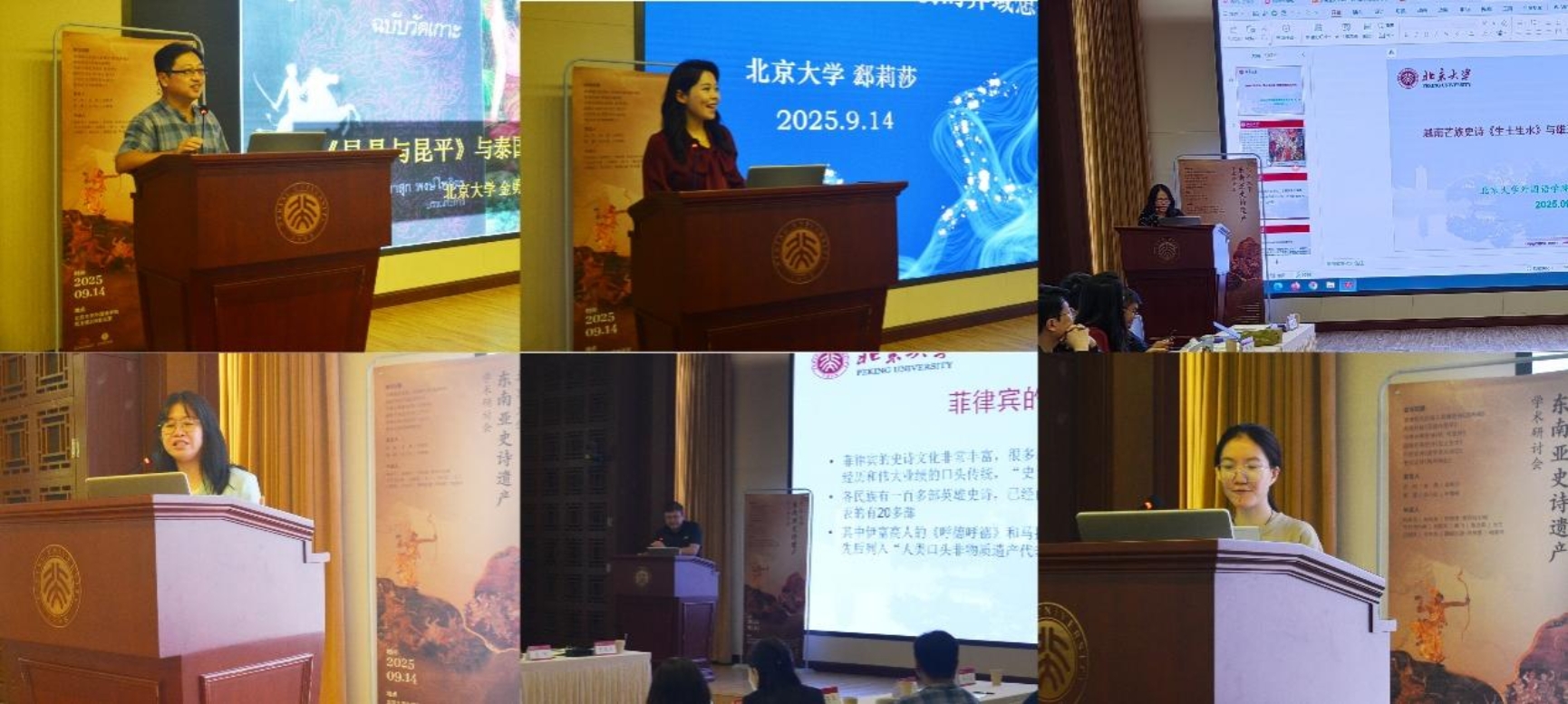
Participating Scholars Delivering Presentations
The second session was chaired by Tenured Associate Prof. Jin Yong, with comments provided by Associate Research Fellow Yu Lan and Prof. Chen Ganglong. Ms. Wu Xiaohong, Lecturer at College of ASEAN Studies of Guangxi University for Nationalities, presented on "Epic Narrative and the Formation of Javanese Ethnic Politics: Based on the Localized Reconstruction of Bharatayuddha," revealing the diversity and continuity of Javanese literature. Tenured Associate Prof. Shi Yang presented on "Warfare Adventures in the Philippine Maranao People's Heroic Epic Darangen," interpreting the local knowledge about warfare contained within the epic. Ms. Ye Jingtong, a Master's student at the School of Foreign Languages, Peking University, presented on "The Process of Cultural Empowerment through Dance Ritual and the Construction of Identity," analyzing how the Sagayan War Dance contributes to identity construction among the Philippine Maranao people.
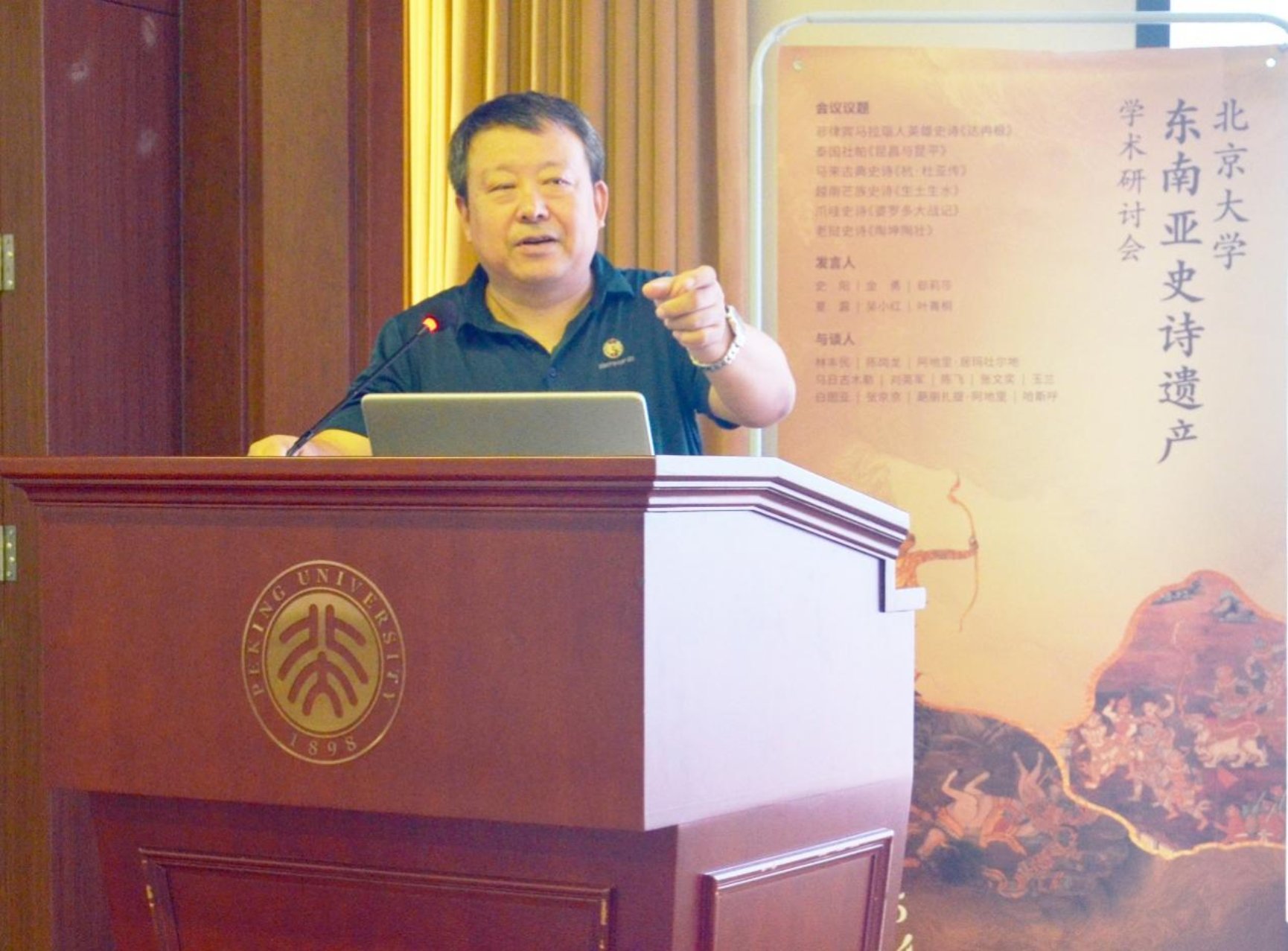
Prof. Chen Ganglong Delivering Concluding Remarks
Finally, Prof. Chen Ganglong delivered the concluding remarks. He highly praised the academic depth of the symposium, noting that the presentations covered fundamental issues in Southeast Asian epic studies and provided new academic directions for future research in this field.
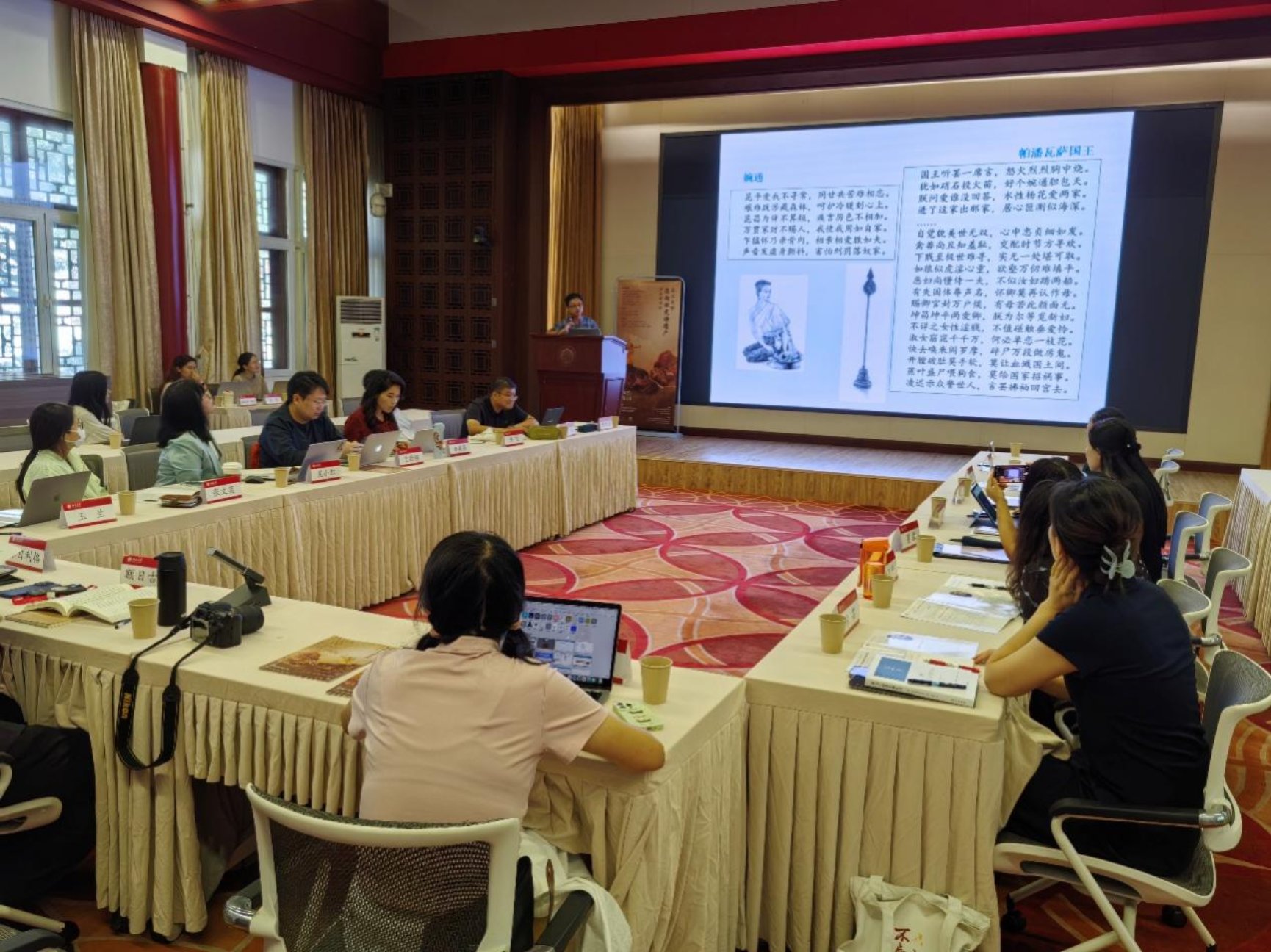
Scene of Symposium
The symposium featured a strong academic atmosphere. Scholars explored issues such as the textual translation, dissemination and evolution, and cultural context of Southeast Asian epics from diverse perspectives, proposing many new viewpoints and angles. The discussions held pioneering significance for advancing further development in related research.
Written by Ye Jingtong
Photos by Ergune
Translated by Wang Zixu