The "Maritime Asia and Civilizational Exchange — The First 'East-West Dialogue'" International Academic Symposium was convened from October 25 to 26, 2025, at the Democracy Hall of Peking University. Scholars and experts from Peking University and the National University of Singapore gathered to engage in in-depth discussions on four cutting-edge topics: "Cultural Exchange and Heritage Preservation," "Interactive Dynamics of Multi-Ethnic Groups and Cultures," "Evolution in the Dissemination of Asian Civilizations," and "Preservation and Dissemination of Asian Cultures in the Intelligent Age." Featuring interdisciplinary and cross-regional research perspectives, the participants jointly explored the multidimensional pathways and historical context of civilizational exchange and mutual learning in Maritime Asia.
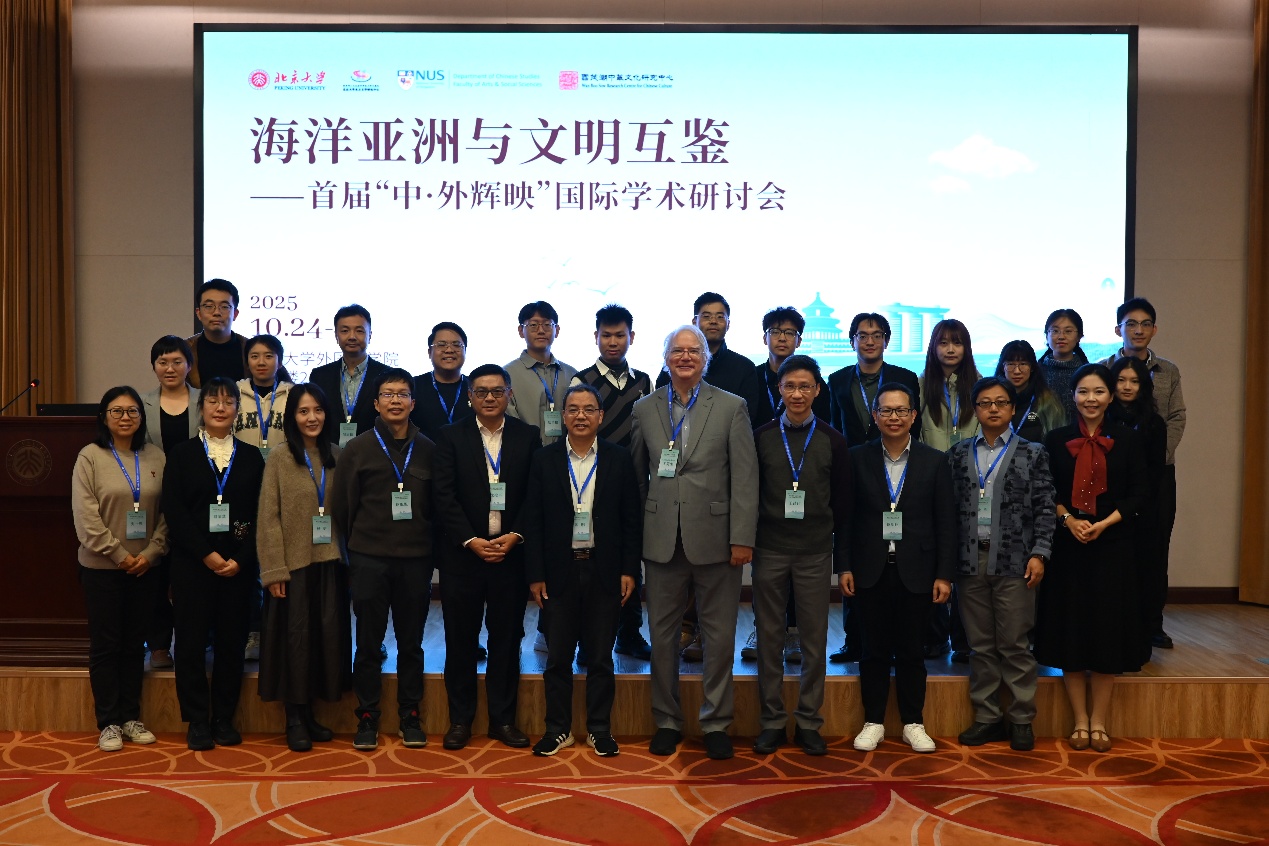
Group Photo of the Participating Scholars
On the morning of the 25th, the opening ceremony of the symposium was presided over by Professor Wu Jiewei, Vice Dean of the School of Foreign Languages at Peking University. Addresses were delivered respectively by Professor Chen Ming, Dean of the School of Foreign Languages and Director of the Research Center of Eastern Literature at Peking University, and Professor Wang Changwei, Head of the Chinese Department at the National University of Singapore. Professor Chen Ming elaborated on the dual connotations of "East-West Dialogue": firstly, "Zhong" refers to the Chinese Department of the National University of Singapore, while "Wai" refers to the School of Foreign Languages at Peking University, symbolizing mutual academic learning and exchange between the two institutions; secondly, "Zhong" represents China, while "Wai" represents Singapore, signifying the exchange and shared prosperity between scholars from the two nations in the humanities. He presented the latest academic progress made by the School of Foreign Languages at Peking University in the field of Maritime Asian civilizations and acknowledged the outstanding achievements of their partner university in this area. Subsequently, Professor Wang Changwei introduced the disciplinary structure of the Chinese Department at the National University of Singapore, emphasizing its foundation on key academic institutions such as the Chinese Library and the Asia Research Centre, encompassing research fields including literature, translation studies, and overseas Chinese studies. He expressed his respect for the significant contributions of the School of Foreign Languages at Peking University to the study of Sino-foreign cultural exchanges and expressed confidence that the current international academic symposium would yield constructive outcomes.
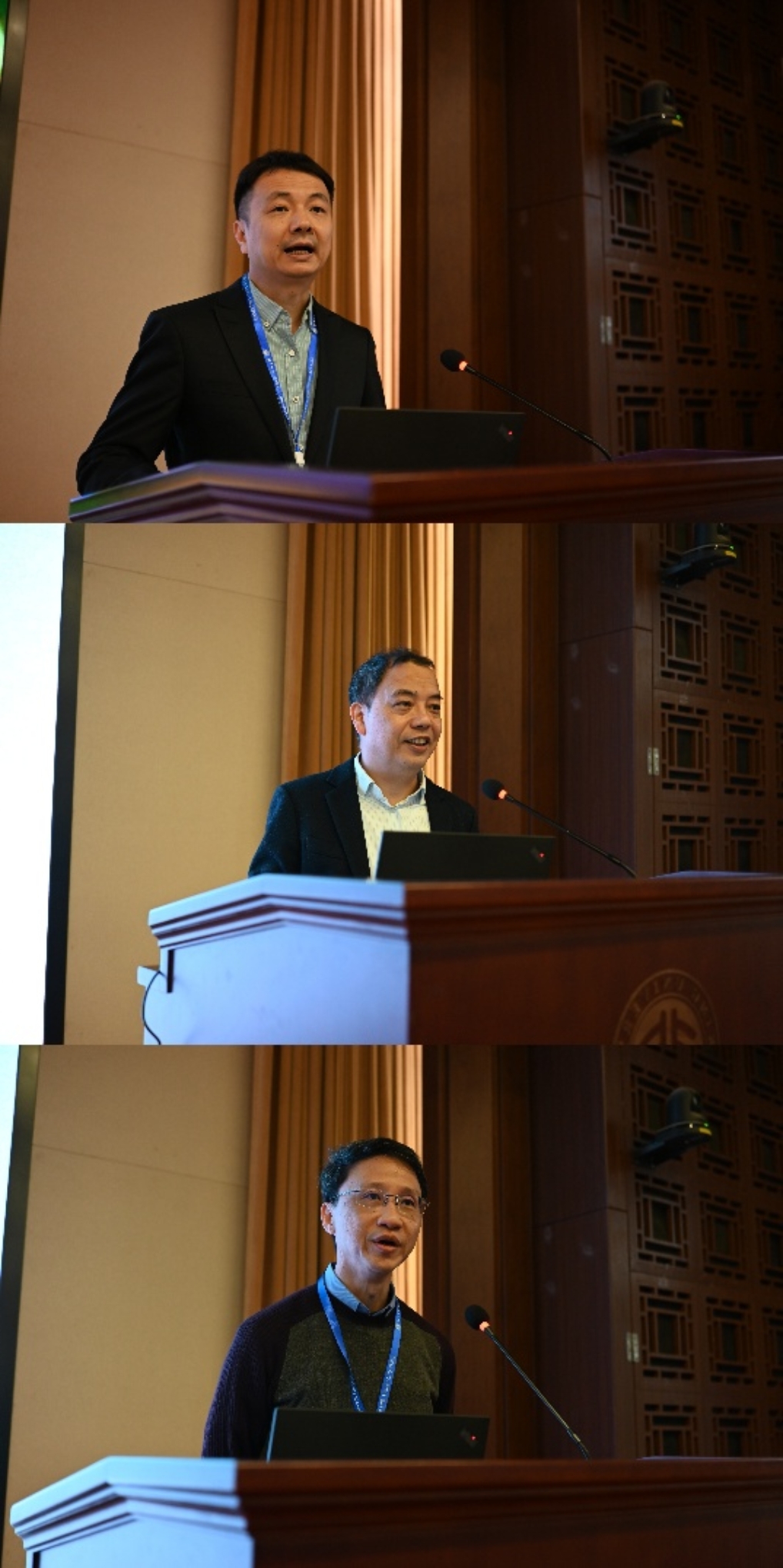
Presiding and delivering addresses at the opening ceremony (from top to bottom): Professor Wu Jiewei, Professor Chen Ming, Professor Wang Changwei
Following the opening ceremony, Professor Wang Changwei presided over the keynote speech session, during which Professor Kenneth Dean, Director of the Yun Mao Chao Chinese Culture Research Centre at the Department of Chinese Studies, National University of Singapore, presented on "Chinese-language Documents in Maritime Asia and Digital Humanities," summarizing folk documents preserved by Southeast Asian Chinese communities and introducing his team's latest achievements in multilingual document collation and digital platforms. Associate Professor Xie Mingda from the Department of History at the National University of Singapore delivered a speech titled "Dharma Rain Nourishing Neighbors: The Role and Significance of Buddhist Diplomacy in China-Singapore Relations," illustrating the unique role of Buddhist diplomacy in secular state practices through case studies such as Venerable Hong Choon's visits to China and the art exhibition "The Secret of the Collapsed Stupa". Professor Chen Ming presented on "Journey to the Southern Ocean: Chinese Buddhist Monks' Quest for Dharma and Propagation of Teachings during the Republican Period," organizing firsthand archival materials on Chinese monks' travels to South and Southeast Asia, thereby revealing the historical and cultural significance of Buddhism's southward transmission in civilizational exchange. Mr. Shen Junping, Deputy Director of the National University of Singapore Libraries, spoke on "Transforming Private Collections into Public Resources: Hsu Shao-nan's Book Donation and its Contribution to the Sinological Academic Ecosystem in Singapore," reviewing Hsu Shao-nan's efforts in collating Chinese academic materials and highlighting the significant impact of his donation of over 7,000 volumes on Sinological research and China-Singapore academic exchange. And Professor Jin Yong, Tenured Associate Professor and Associate Head of the Department of Southeast Asian Studies at the School of Foreign Languages, Peking University, discussed "Persian Narratives and the Political Culture of the Ayutthaya Kingdom in Thailand," exploring Persian cultural influences on Thai court literature and noting that "The Twelve Tales of the Iranian Kingly Way" was adapted by Thai court literati into a Buddhist-inspired book of admonitions, reflecting political dynamics between the monarchy and nobility.
During the discussion session, participating scholars delved into key issues including the literary nature of Thai prose and local literary criticism theories, methodological approaches and prioritization in document digitization, as well as nationalism and cosmopolitanism within Buddhism. The keynote reports in this segment, grounded in the "Maritime Asia" perspective, outlined a comprehensive picture of Asian civilizational exchange and mutual learning from documentary, religious, historical, and cultural dimensions, thereby laying a solid foundation for subsequent thematic panels.
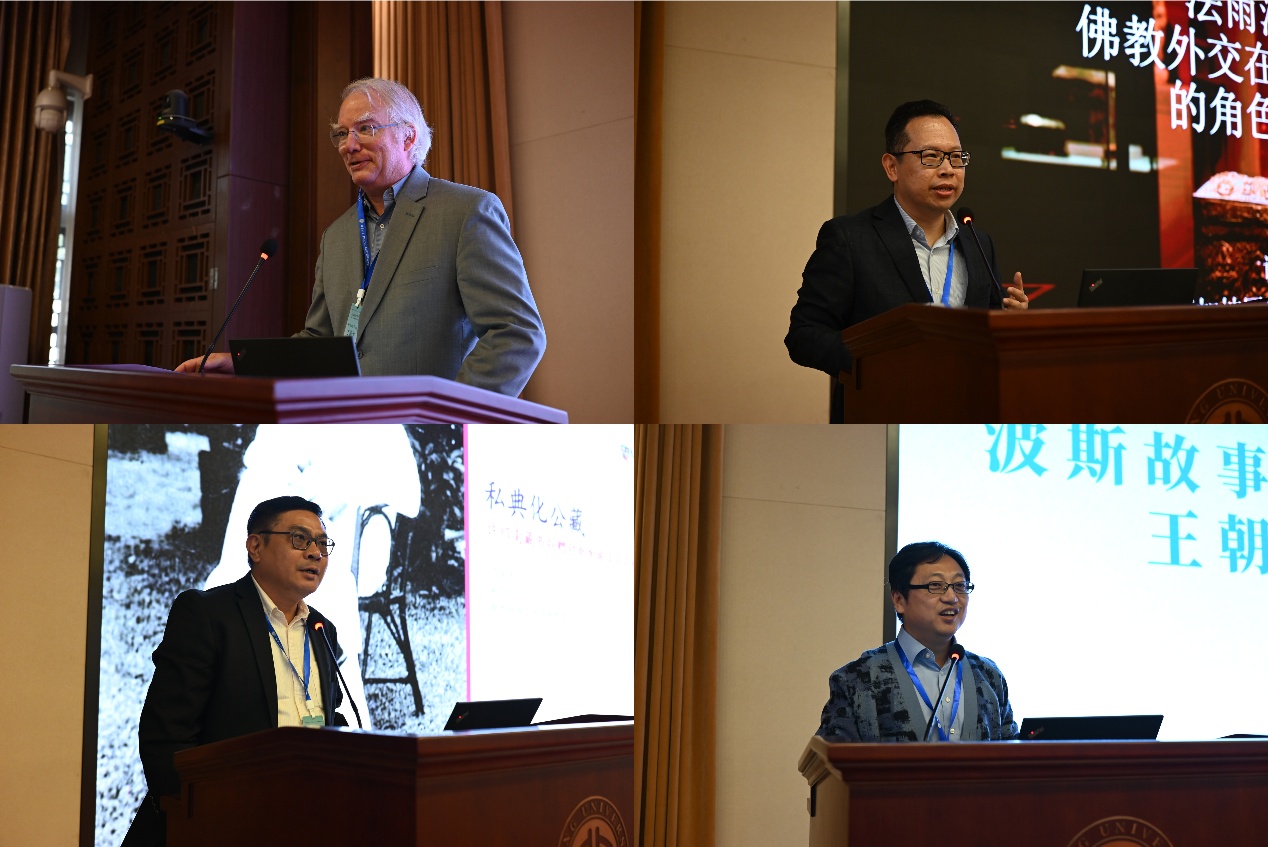
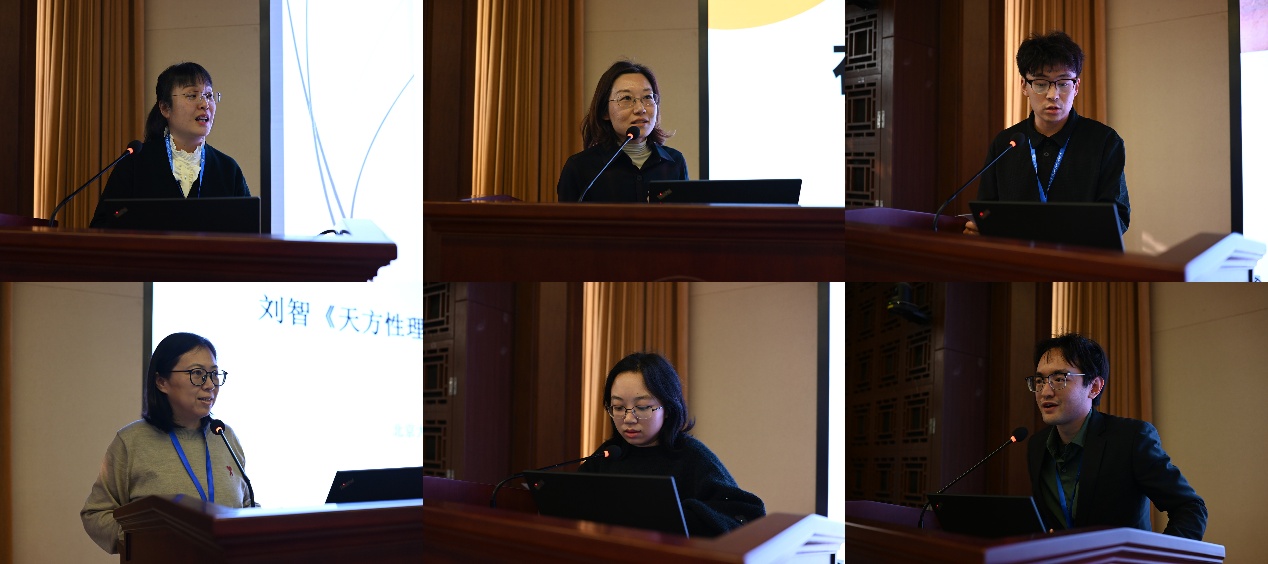
Presentations by the Participating Scholars
The first afternoon panel, themed "Literature, Imagery, and Cross-Cultural Narratives," was chaired by Associate Professor Xie Mingda. Associate Professor Weng Jiahui from the Department of Japanese Language and Culture of the School of Foreign Languages at Peking University presented on "Distinction between Refined and Popular: The Translation and Dissemination of Dream of the Red Chamber in Japan," examining its diverse dissemination routes through the lens of civilizational exchange while analyzing Japan's evolving popular culture and publishing industry to elucidate underlying cultural mechanisms. Professor Wu Jiewei delivered a presentation titled "16th-19th Century Merchant Vessels in Circum-Pacific Trade: Design, Construction, and Order," situating these vessels within multilayered contexts of regional trade networks, shipbuilding technological history, political power dynamics, and cultural dissemination to reveal how merchant vessels facilitated the integration of disparate regional trading circuits into a unified global trade system. Assistant Professor Xiong Ran from the same school addressed "The Manifestation of Ramayana Imagery in Southeast Asia's Pluralistic Contexts," tracing the epic's dissemination pathways across Indonesia, Cambodia, Thailand, Myanmar, and Laos while examining how cross-cultural interactions enabled its localized reinterpretation as a narrative nexus connecting text, sound, and imagery. Research Fellow Xiang Wei presented "Japanese Picture Tales and Dunhuang Transformation Texts from Civilizational Exchange Perspective," employing etymological analysis to explore formative characteristics of Japanese emaki (picture scrolls) while conducting comparative analysis with Dunhuang "transformation texts" and "transformation images," ultimately revealing how Japanese picture tales underwent cultural subjectivity transformation through interactions with Chinese civilization.
The discussion session featured Researcher Yang Yan from the Department of Chinese Studies and Yun Mao Chao Chinese Culture Research Centre at the National University of Singapore as the designated commentator. Participating scholars engaged in in-depth discussions on key issues including the reception of Dream of the Red Chamber in Japan, the preservation status of China's maritime archives, the secular and religious dimensions within the Ramayana texts, and the influence of Japanese picture tales on neighboring countries. This session revealed the multiple dimensions of literature and imagery in cross-cultural narratives, thereby providing new pathways for cross-cultural literary research.
The second seminar session, entitled "Knowledge, Thought, and Textual Practices," was presided over by Deputy Director Shen Junping. Lecturer Shen Yiming from the School of Foreign Languages at Peking University delivered a presentation titled "Liu Zhi's 'Tianfang Xingli' and the Translingual Flow of Islamic Knowledge," focusing on the global academic value of the text. She demonstrated the profound intellectual dialogue between Islamic philosophy and Confucian thought embedded within the work, thereby illuminating the complex mechanisms of knowledge circulation and reproduction within Asian intellectual networks. Graduate student Xiong Yi presented on behalf of Assistant Professor Zhang Minyu. The presentation, "Beyond Macaulayism: Rethinking Linguistic-Knowledge Hierarchies in Indian Ocean Studies," critically examined the legacy of colonial-era linguistic classification systems. It contextualized these hierarchies within the "maritime-terrestrial" research paradigm and geopolitical considerations, ultimately proposing alternative perspectives to transcend the colonial framework of linguistic order. Ph.D. candidate Zhang Xincheng from the Department of Chinese Studies at the National University of Singapore presented on "The Philosophy of 'Ink Grinding the Person' in Su Shi's Writings and Its Reception in Korean Poetry Circles." His analysis revealed the philosophical approach in Su Shi's work, which breaks the subject-object binary by assigning agency to objects, and explored how localized transformations of this materially-grounded philosophical resonance facilitated the dissemination of literary allusions. Researcher Yang Yan's presentation, "A Typical Model for the Spread and Development of Traditional Chinese Medicine in Southeast Asia: The Case of Charitable TCM in Singapore," utilized primary sources including archives, field observations, and interviews to conduct a case study of Singapore's charitable TCM model. She positioned the model within the broader Southeast Asian context, conducting both horizontal comparisons of its variations across different regions and a vertical examination of its transformational trajectory.
During the discussion session, which was divided into two thematic panels—"Translingual Flow and Localized Reconstruction of Knowledge" and "Critical Reflections on Knowledge Continuity and Civilizational Exchange"—with Professor Wu Jiewei serving as the discussant, participating scholars delved into key issues including cultural exchanges among the late Ming literati, academic contributions of multilingual Chinese Muslim scholars, and Southeast Asian local knowledge systems. The discussion focused on the integration of diverse Asian knowledge systems and intellectual traditions, highlighting the crucial significance of multilingual, multicultural, and multi-regional academic perspectives for understanding civilizational exchange.
Presentations by the Participating Scholars
On the morning of the 26th, the third seminar session, themed "Migration, Communities, and Identity Construction," was presided over by Shi Yang, Tenured Associate Professor and Head of the Department of Southeast Asian Studies at Peking University's School of Foreign Languages. Xie Kankan, Tenured Associate Professor at the same school, presented on "Multilingual Networks: Returned Overseas Chinese and the Origins of Chinese Indonesian Language Education (1945–1965)," employing the concept of "Circulatory Diplomacy" to analyze the role of returned overseas Chinese networks in promoting Indonesian cultural dissemination and Chinese knowledge production, thereby enriching theoretical perspectives in overseas Chinese studies and the history of foreign language education. Assistant Professor Qie Lisha delivered a presentation titled "The Construction of Modern and Contemporary Indonesian Nationalist Discourse: A Literary Perspective," which examined classic Indonesian nationalist texts to analyze narrative strategies and discourse formation addressing Western colonial culture and negotiating indigenous traditions with modernization. PhD student Zhu Junkai from the National University of Singapore's Department of Chinese Studies presented "Trans-Maritime and Overland Activity Networks: The Hakka Community in Malacca during the Colonial Era," using the case study of the Malacca Hakka community to explore how Chinese ethnic groups engaged in regional interaction and civilizational exchange through maritime and land networks during the colonial period. PhD candidate Xia Peigen from the same department presented "Cultural Identity, Political Dynamics, and Cross-Border Interactions of the Sanjiang Community in Southeast Asia (1897–1977)," comparing the strategies employed by the Sanjiang community in shaping cultural identity within foreign environments and their political impacts, thereby revealing the community's transformative journey from the periphery to the center within Southeast Asian Chinese societies.
The discussion session was moderated by Professor Kenneth Dean as the discussant. Scholars engaged in in-depth deliberations on key topics including Indonesian language education practices within Overseas Chinese farms, the connection between Max Havelaar and Pramoedya Ananta Toer's literary works, interactions between the Hakka and Peranakan communities, and the impact of social media on the Sanjiang community. Through case studies examining returned overseas Chinese educational networks and the cultural dynamics of Southeast Asian Chinese communities, this session broadened research perspectives on identity construction among diasporic groups in the Malay world, while simultaneously offering new insights for colonial discourse studies through the lens of Indonesian nationalist literature.
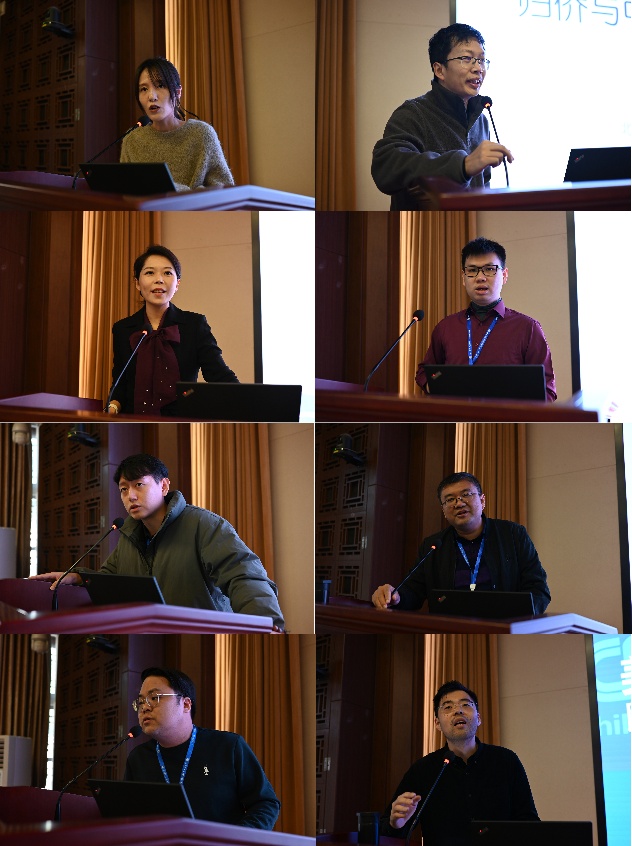
Presentations by the Participating Scholars
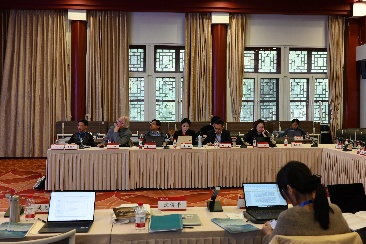
The subsequent fourth seminar session, themed "Politics, Discourse, and Networks in Modern Asia," was chaired by Jin Yong, Tenured Associate Professor. Shi Yang, Tenured Associate Professor, presented on "Wit and Sorcery: Wartime Adventures in the Philippine Maranao Epic 'Darangen'," focusing on the epic's narrative structure to analyze its embodiment of local knowledge systems and cultural psychology, while examining the ethical values, political order, and social orientations reflected in the text, thereby elucidating how the epic constructs ethnic identity and shapes cultural memory through narrative frameworks. PhD candidate Yang Zongyou from the Comparative Asian Studies program at the National University of Singapore delivered a presentation titled "A Bridge of Faith and Identity: Exploring the Dynamic Interactions Between Manila's Chinese Catholic Church and China," using Xavier School as a case study to examine the educational motivations and practices of Jesuit missionaries in Manila, while revealing the proactive role of the Chinese Catholic community in fostering mutual understanding between China and the Philippines. Research Assistant Ma Yuchen from the School of Foreign Languages at Peking University presented "The American Shaping of the Philippine Media System's Modernization," analyzing how U.S. institutional exports since the 20th century influenced the modernization of the Philippine media landscape, while exploring the interactions and negotiations between American hegemony, local elites, and the public during institutional transplantation, thereby providing historical perspective for understanding America's role in the Philippines' modernization process.
During the discussion session moderated by Assistant Professor Xiong Ran as the discussant, participating scholars engaged in thorough deliberations on key topics including the relationship between Philippine traditional healers and epic chanters, the class structure within Manila's Chinese Catholic community, and the effectiveness of China-Philippines cooperation in the field of facility connectivity. Through examining the Philippines as a multidimensional nexus, this session provided new perspectives for understanding how Asian nations generate political discourses and social networks within the intricate interplay of colonial legacies, religious flows, and cultural memory.
Conference Scene
The closing ceremony of the symposium was presided over by Associate Professor Weng Jiahui. Tenured Associate Professor Shi Yang and Professor Kenneth Dean delivered concluding remarks and summarized the proceedings. Tenured Associate Professor Shi Yang reiterated the profound significance of "East-West Dialogue," emphasizing that the symposium not only demonstrated the substantial academic achievements of Chinese and international scholars in Maritime Asian studies but also highlighted the importance of academic exchange. Employing the metaphor of a "ship," he encouraged young scholars to determine their academic directions at an early stage. Professor Kenneth Dean expressed sincere gratitude to the School of Foreign Languages at Peking University, acknowledging its distinguished tradition in nurturing young scholars and expressing hope for future collaborative academic endeavors with the faculty and students of the School in Singapore.
The "Maritime Asia and Civilizational Exchange — The First 'East-West Dialogue'" International Academic Symposium facilitated interdisciplinary dialogue across multiple fields including literature, linguistics, history, philosophy, anthropology, iconography, and political science, while stimulating research enthusiasm among young scholars. The successful convening of the symposium signifies the further deepening of collaboration between Peking University and the National University of Singapore in cutting-edge research domains, and has created favorable conditions for future faculty-student exchanges and academic cooperation between the two institutions.
Text by Zhao Yizhi
Photos by Ji Hailu
Translated by Gao Yanshu