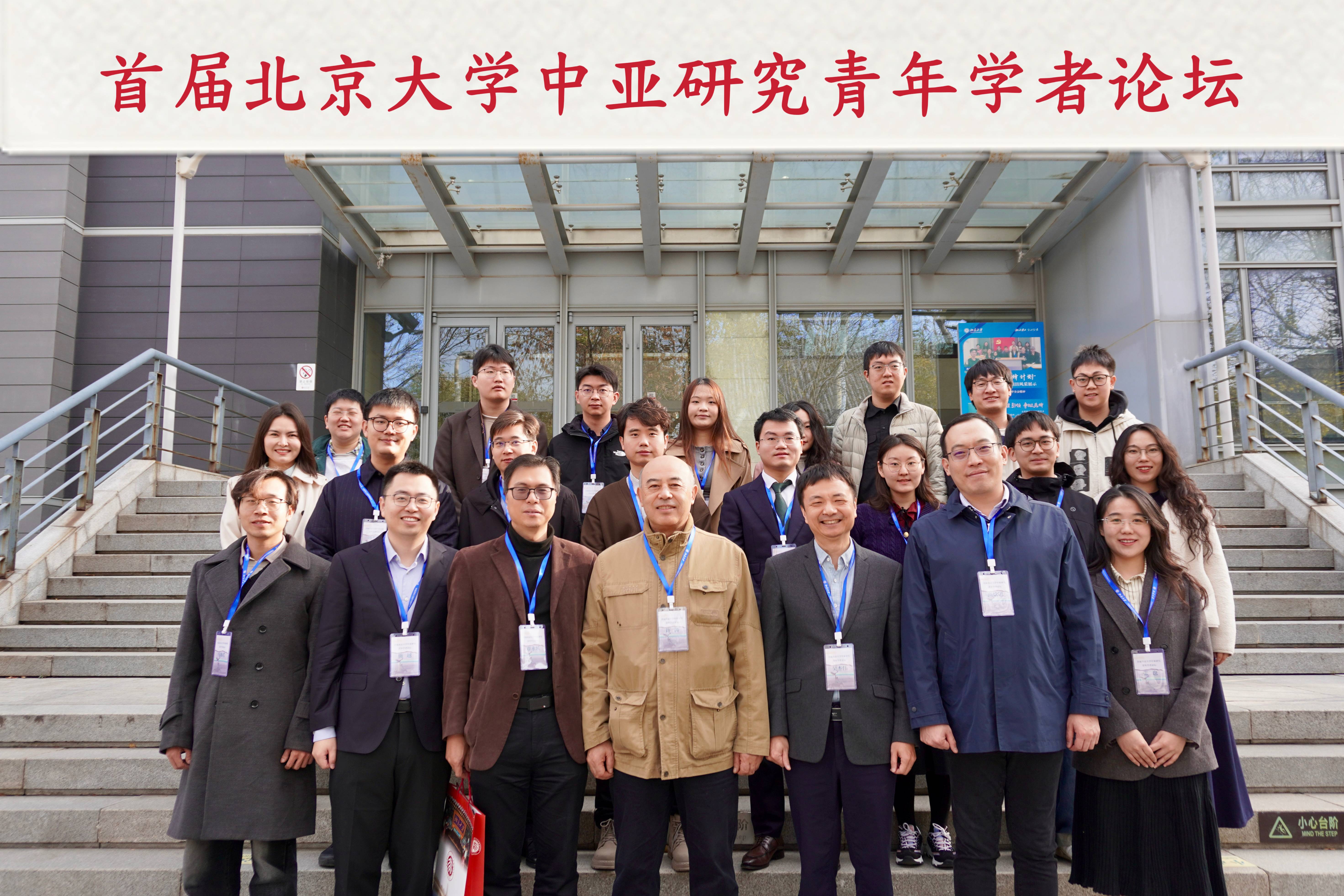
The inaugural Peking University Young Scholars Forum on Central Asian Studies was successfully held on November 15, 2025, in Room B134 of the New Building of the School of Foreign Languages. The forum was jointly organized by the Peking University Center for Central Asian Studies, the School of Foreign Languages, and the Institute of Area Studies. More than ten young scholars from prestigious institutions worldwide—including Peking University, Tsinghua University, Georgetown University, Renmin University of China, and East China Normal University—participated in the event. Several esteemed experts served as discussants, facilitating in-depth exchanges on key issues related to Central Asia’s history, culture, social development, and geopolitical dynamics.
The opening ceremony was chaired by Tenured Associate Professor Shi Yue, Director of the Peking University Center for Central Asian Studies. Professor Wu Jiewei, Vice Dean of the School of Foreign Languages, extended a warm welcome to the participants and highlighted the Center’s significant contributions to disciplinary development since its establishment. Tenured Associate Professor Zhang Yongle, Vice Dean of the Institute of Area Studies, expressed his congratulations on the successful launch of the forum and expected its vital role in advancing a structurally independent Chinese knowledge system on Central Asia.

In his keynote speech, Dr. Xu Tao, Deputy Director of the Institute of Eurasian Social Development at the Development Research Center of the State Council, stressed the importance of a spatiotemporal perspective in Central Asian studies. He urged scholars to leverage China’s rich historical archives while accounting for the region’s unique geo-historical position as a crossroads of civilizations and an inner Asian hub. In response to the region’s ongoing transitions and emerging opportunities, Dr. Xu proposed that China should move beyond traditional cooperation models and provide systematic support in green development, the digital economy, and security governance, which constitute practical steps toward building a China-Central Asia Community with a Shared Future.
The forum featured invited discussants from leading research institutions, including:
Dr. Gao Hanxun, Associate Researcher, Institute of Russian, East European & Central Asian Studies, Chinese Academy of Social Sciences;
Dr. Zhang Ye, Assistant Researcher, Institute of Eurasian Studies, China Institutes of Contemporary International Relations;
Dr. Yingkaer, Lecturer, School of History and Culture, Minzu University of China;
Dr. Dong Yu, Lecturer, School of History, Capital Normal University;
Dr. Ma Hairuo, Postdoctoral Fellow, School of Foreign Languages, Peking University.
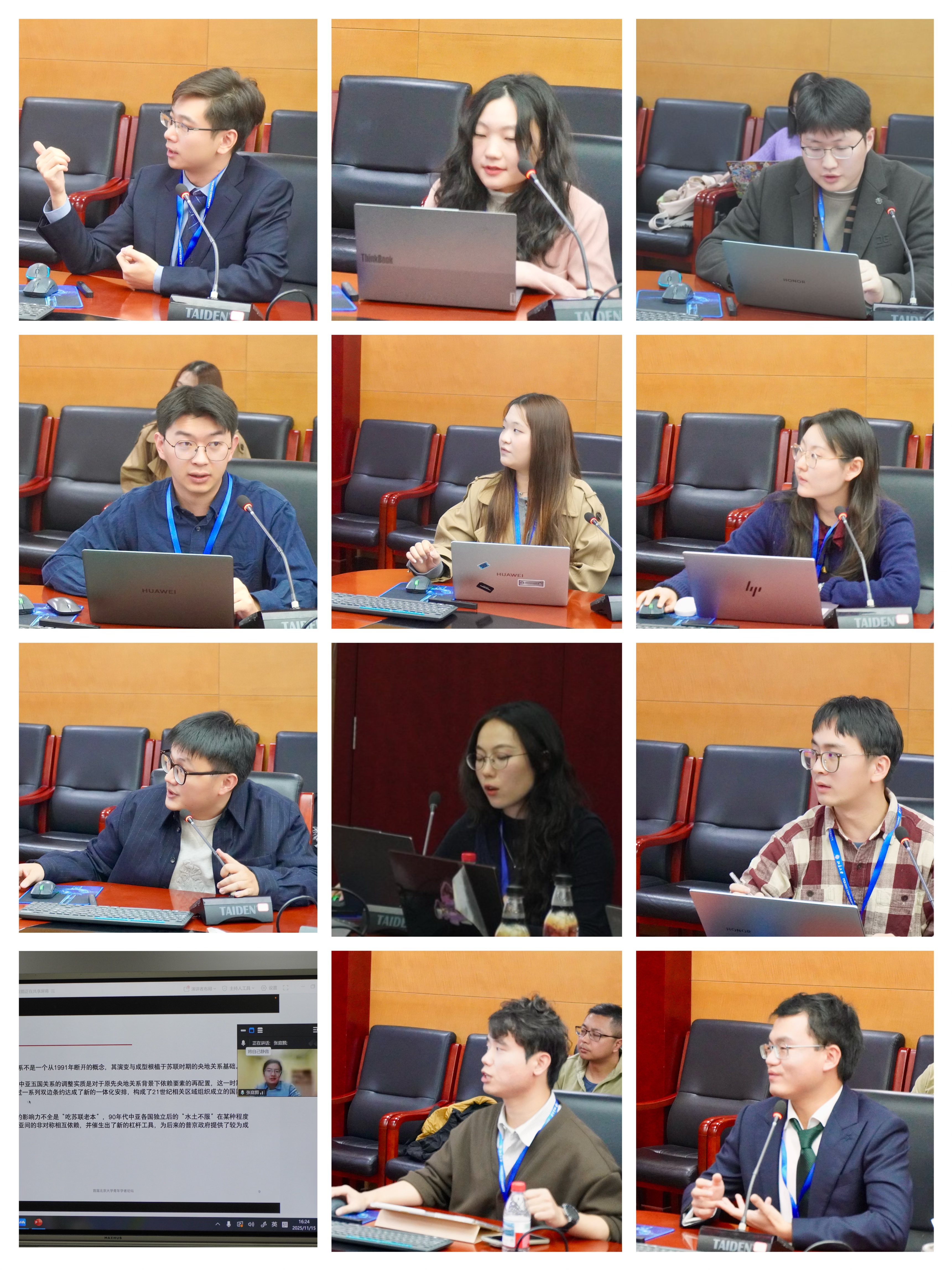
They engaged presenters in vigorous discussions following academic presentations.
Four parallel panels were organized, addressing the following themes, in which participants gave insightful presentations:
1.Social Transformation and Identity Reconfiguration in Contemporary Central Asia;
2.Factor Flows and Integration in Central Asian Development;
3.Historical Changes in Central Asian Civilizations;
4.Local Governance Within the Russian-Soviet Tradition.

In his concluding remarks, Dr. Shi Yue expressed gratitude to all experts and young scholars for their active participation. He noted a persistent gap between basic and policy-oriented research in the field of Central Asian studies and called for more events like this forum to bridge methodological and content-based divides. By fostering interdisciplinary dialogue and multi-perspective exchanges, he said, the academic community can collectively build a dynamic knowledge ecosystem and contribute to a structurally autonomous Chinese framework for Central Asian studies.
Translated by Zhou Junxia