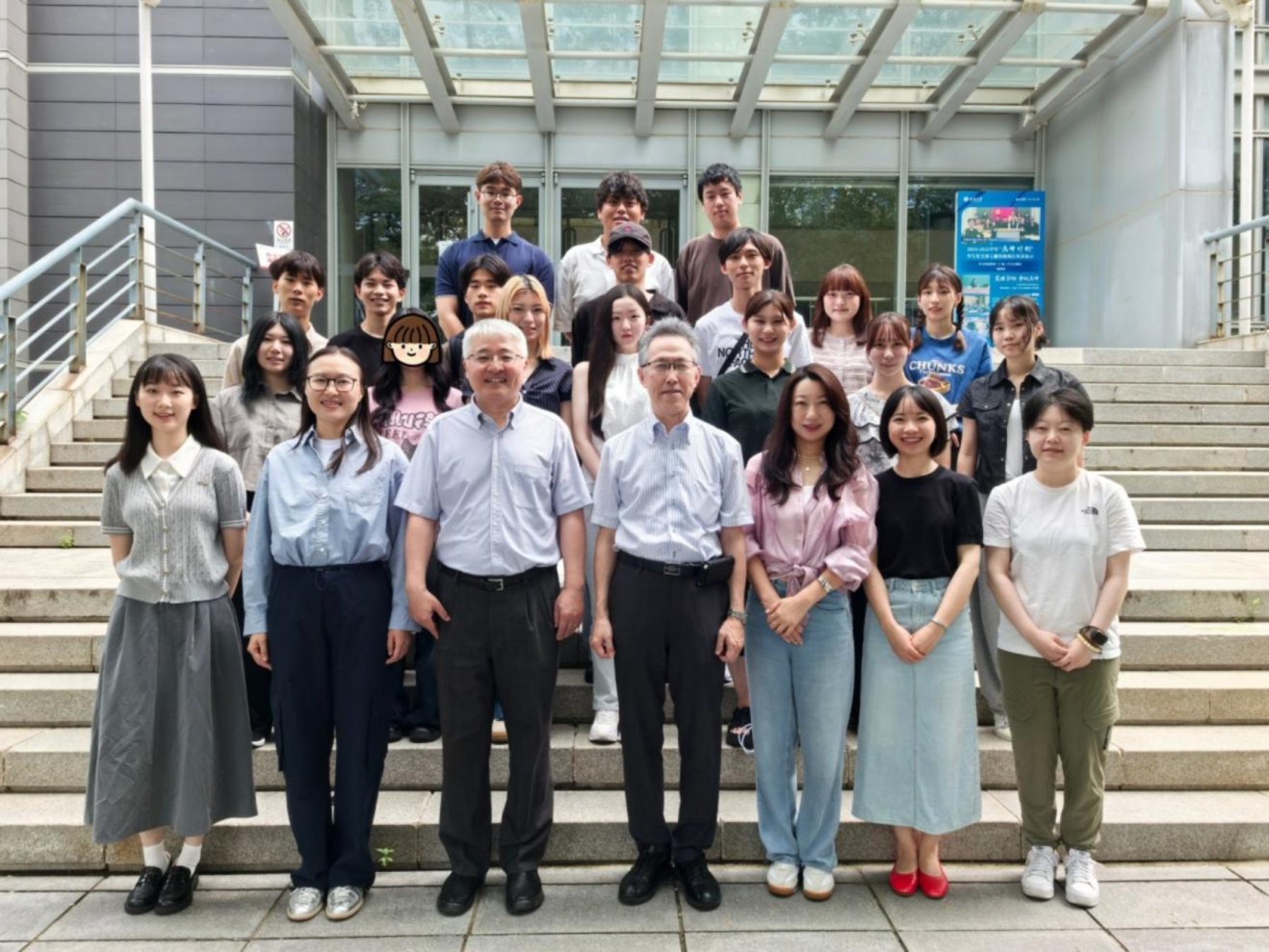
From August 18 to 27, 2025, 19 students from Japan and South Korea, organized by the Ritsumeikan Confucius Institute, gathered at the School of Foreign Languages of Peking University to participate in an eleven-day summer camp. Jointly hosted by the Office of International Cooperation and the School of Foreign Languages of Peking University, the program aims to provide international students with a high-quality platform for language and culture learning, allowing them to deeply experience traditional Chinese culture and modern development while fostering exchanges and friendships among young people from China and abroad.
On the morning of August 18, the opening ceremony was held in Room 301 of the School of Foreign Languages. Professor Sun Jianjun from the Department of Japanese delivered a bilingual speech in Chinese and Japanese, warmly welcoming the students who have traveled from afar. Ms. Shi Lei from Peking University, Mr. Shimazu Masahiko, Director of the Ritsumeikan Confucius Institute, and Ms. Tong Zhenqing from the Ritsumeikan Beijing Office also delivered speeches. They encouraged the students to actively explore the profundity of Chinese culture and wished them a fruitful and memorable stay at Peking University. After the ceremony, the support team provided a detailed introduction for study arrangements, daily life, and off-campus activities. A campus tour was organized for the students to learn about the history and architecture of Peking University.
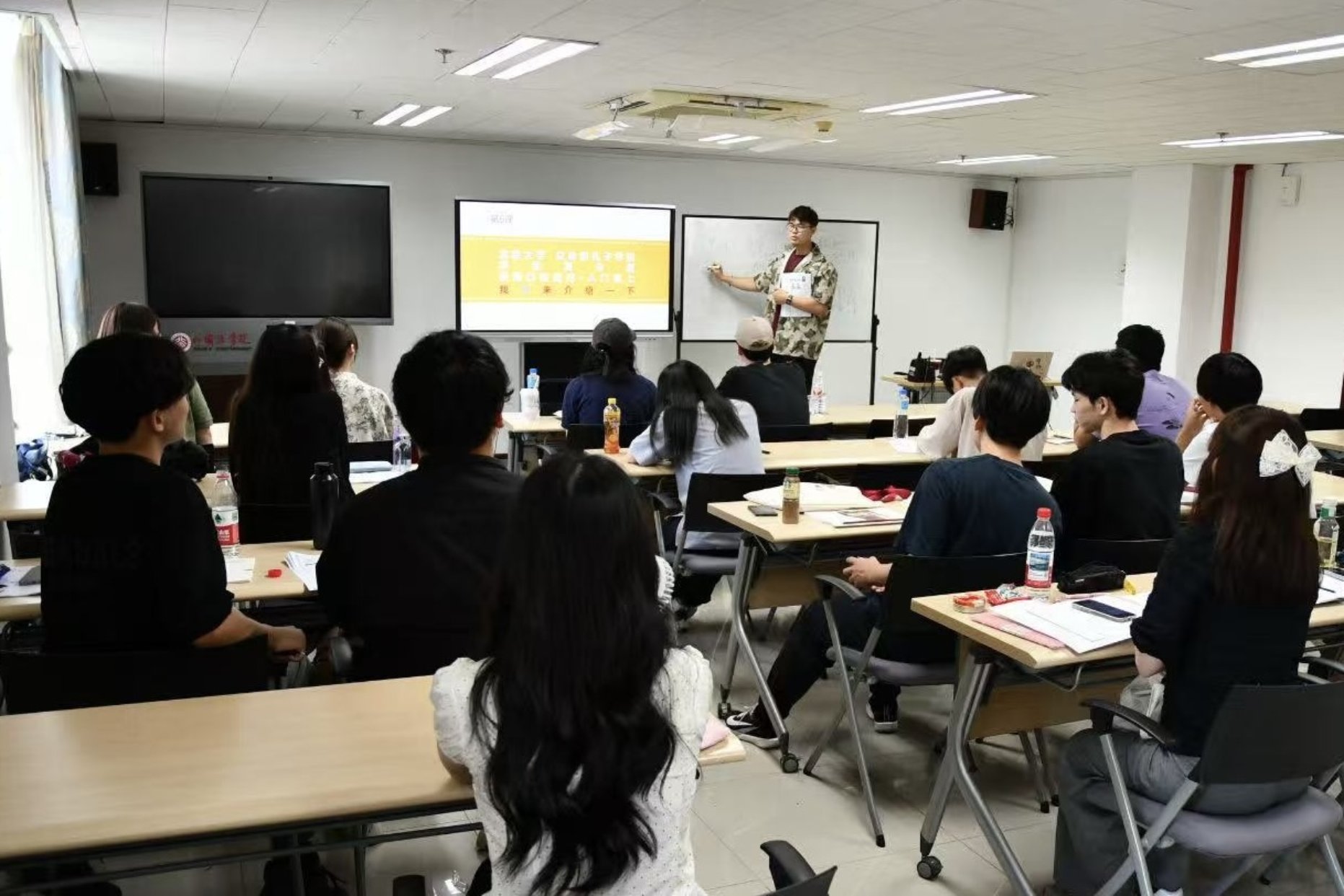
Over the following ten days, the students studied the Chinese language course and attended a lecture on Sino-Japanese cultural exchange delivered by Wang Jing, Associate Professor from the Department of Japanese. The course was jointly conducted by graduate students from Peking University’s Department of Japanese and the School of Chinese as a Second Language. The curriculum emphasized practicality, contemporaneity and authenticity. The teaching content is closely connected to modern urban life scenarios in China, such as food delivery, online ride-hailing services and tea beverage consumption, helping students learn and use Chinese in real-life contexts while gaining deeper insights into the development of contemporary China.
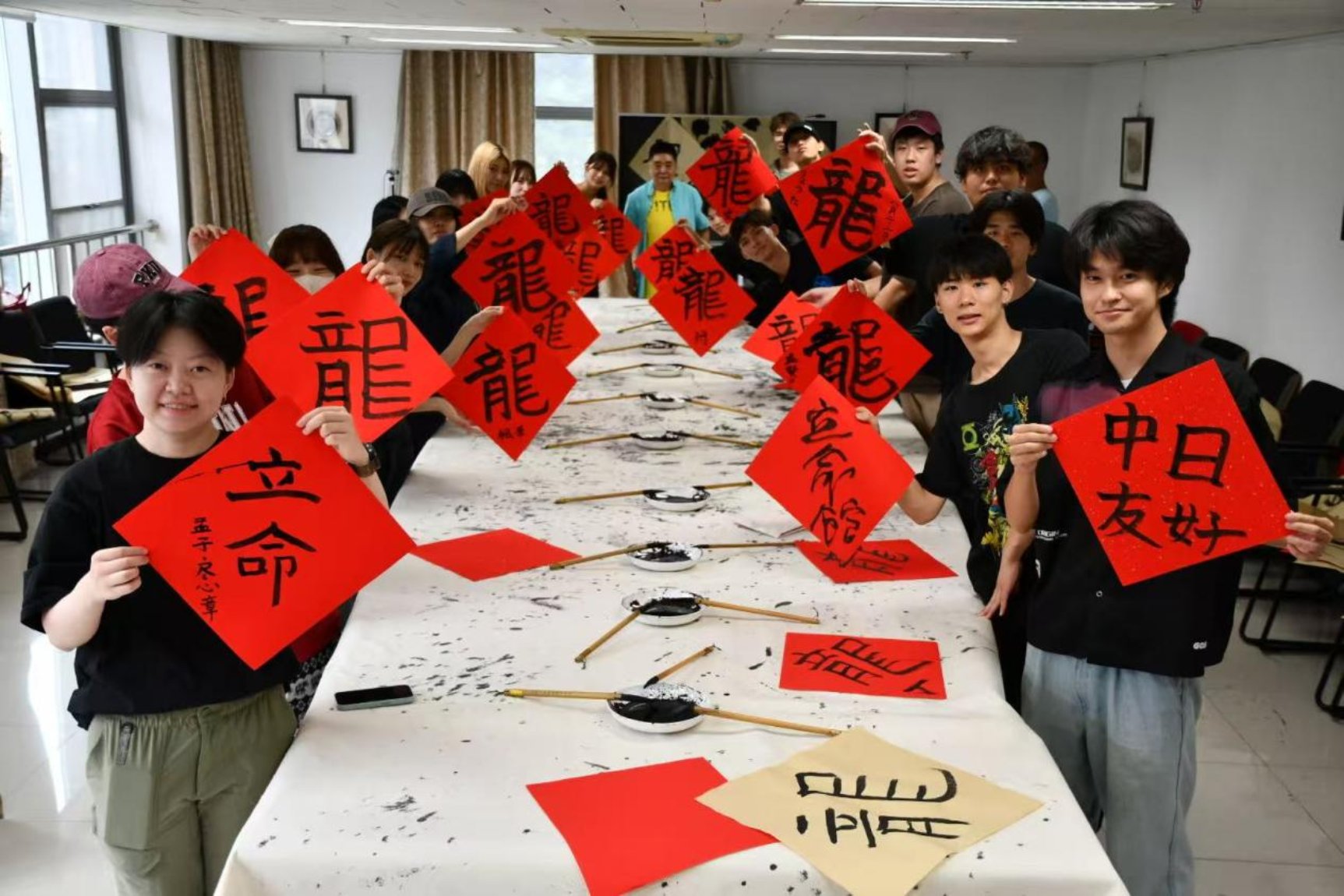
The sessions of experiencing Chinese culture were equally engaging. Students participated in workshops of tea ceremony, guqin (traditional Chinese zither) and calligraphy, gaining firsthand experience of the elegance of traditional Chinese arts. During the tea ceremony activity, they enjoyed various types of Chinese tea while learning about the history of tea culture and modern innovations in tea beverages. In the guqin class, under the guidance of the instructors, students tried performing the song Beijing Welcomes You, experiencing the beauty of classic Chinese musical instruments The calligraphy workshop introduced the art through the lens of Spring Festival customs, where students practiced writing the character “福”(fortune) and compared the Chinese and Japanese forms of the character “龍”(dragon), vividly illustrating the art of calligraphy and the historical culture exchanges between the two countries.
In addition to on-campus activities, the students also visited historical and cultural sites such as the Temple of Heaven, the Summer Palace, and the Great Wall, where they got a real sense of the profound heritage of Chinese civilization. During their free time, they also actively explored urban landmarks in Beijing, immersing themselves in the vibrant energy and developmental achievements of contemporary China.
The closing ceremony of the summer camp was held on August 27. The students showed self-produced videos reflecting their learning and life experiences at Peking University and in Beijing and shared their insights and gains in Chinese. Finally, Ms. Yue Chenchen from the Continuing Education Office of the School of Foreign Languages at Peking University and Ms. Tong Zhenqing from the Ritsumeikan Beijing Office presented completion certificates to all participants, fully acknowledging their efforts and growth. Full of memories and friendships, the students brought the summer camp to a successful conclusion.
Relying on its strengths in multilingual and regional studies, the School of Foreign Languages continues to provide international students with opportunities to understand China and explore Peking University, actively promoting cultural exchanges and mutual understanding between China and other countries.
Text by Lian Xu
Source from Continuing Education Office
Translated by Song Yucen