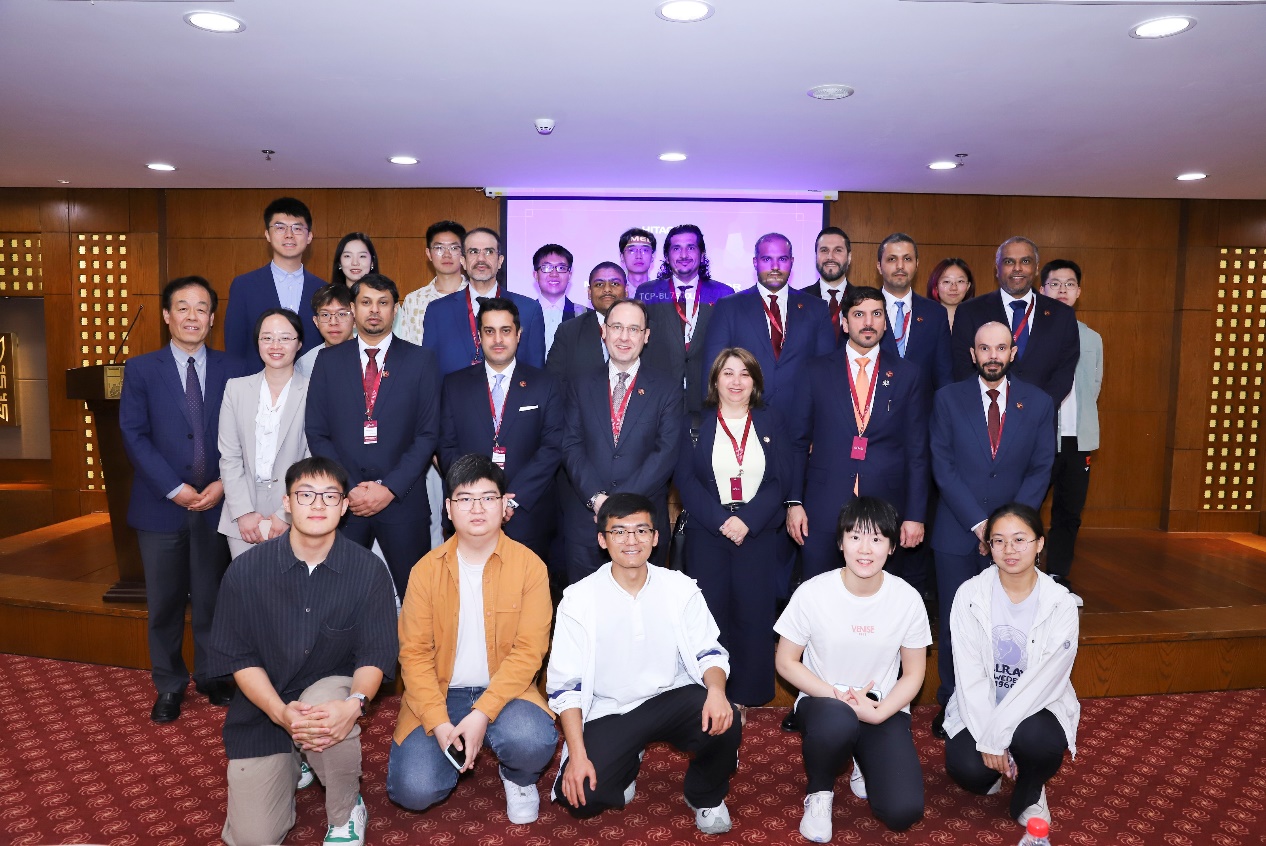
On the morning of May 11, 2026, a delegation from the Qatar Leadership Center (QLC) visited Peking University. Led by Professor Steven Wright, Director of the Leadership Think Tank at QLC, the delegation comprised members from various Qatari institutions, including the Government Information Office, State Audit Bureau, Ministry of Labor, Ministry of Transport, Ministry of Education, Central Bank, Taxation Administration, Civil Service and Government Development Bureau, and Qatar National Museum. The delegation held a symposium with faculty and students from the Department of Arabic Language and Cultures of Peking University (PKU), which was presided over by Tenured Associate Professor Lian Chaoqun, Deputy Director of the Department. Participants included Professor Fu Zhiming, Associate Dean of the School of Foreign Languages and chair professor of The Sultan Qaboos Chair in Arabic Studies at PKU; Associate Professor Wu Bingbing, Director of the Department of Arabic Language and Cultures of PKU, Director of CMES-PKU, and chair professor of State of Qatar Chair in Middle Eastern Studies at PKU; Associate Professor Li Haipeng and Assistant Professor Li Ruiheng of the Department of Arabic Language and Cultures of PKU; along with several students from the department.

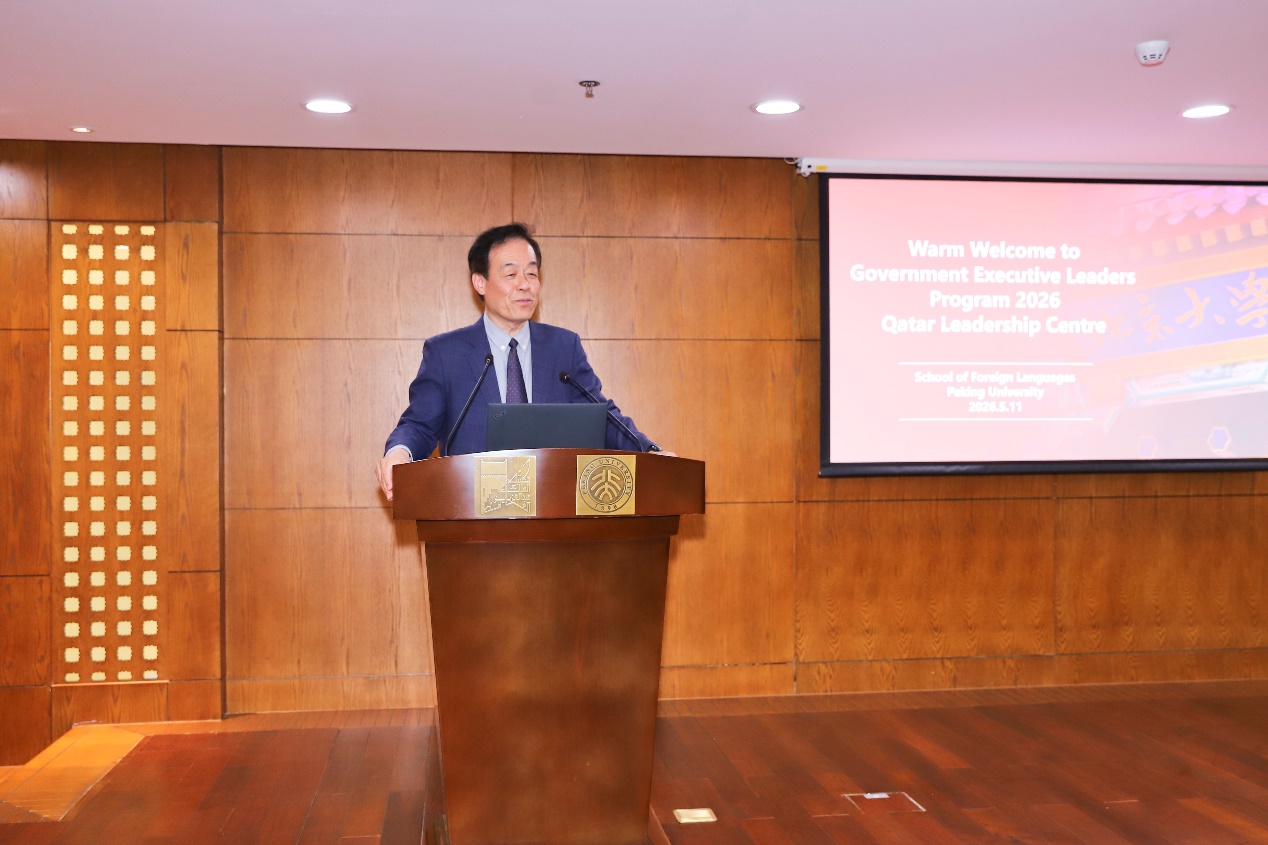
At the opening of the symposium, Professor Fu Zhiming extended a warm welcome to the delegation and introduced Peking University’s history, academic structure, student body, and teaching and research capabilities. Professor Steven Wright expressed sincere gratitude for the warm reception and introduced the development history, talent cultivation programs, and composition of the QLC delegation. He stated that he hoped this visit would serve as an opportunity to build a bridge for academic exchange and mutual communication, leveraging respective resources to explore cooperation potential in areas of shared interest.
Tenured Associate Professor Lian Chaoqun introduced the development and academic achievements of the Department of Arabic Language and Cultures. Established in 1946, it is the first Arabic major in Chinese higher education. It currently features four core research directions and offers a complete bachelor’s, master’s, and doctoral training system. Relying on platforms such as CMES-PKU, the department has produced substantial research output and enjoys a broad academic reputation in the fields of China-Arab civilization exchanges and Middle Eastern regional studies.

Professor Fu Zhiming presented on the Chinese civil service system. He outlined the overall scale, organizational structure, daily management norms, and operational mechanisms of the national civil service. He provided a comprehensive explanation of the reformative ideas and innovative practices in civil service development in the new era. Combining comparisons with foreign governance models, he analyzed how China's civil service reforms are rooted in local conditions and aligned with development realities. He also reviewed the historic achievements made under the leadership of the Communist Party of China in fields such as economic development, political construction, livelihood security, and social governance, demonstrating the strong governance efficacy and developmental vitality of the socialist system with Chinese characteristics.
Assistant Professor Li Ruiheng introduced China’s diplomatic policy toward the Middle East. He noted that China-Arab interactions have a long history dating back to the ancient Silk Road. The establishment of diplomatic relations between the People's Republic of China and Egypt in 1956 marked a new chapter in friendly exchanges between contemporary China and the Middle East. Currently, China and Middle Eastern countries have built a multi-level and three-dimensional diplomatic pattern encompassing bilateral exchanges, sub-regional collaboration, and regional cooperation. Relying on mature mechanisms such as the China-Gulf Cooperation Council Strategic Dialogue, the China-Arab States Cooperation Forum, and the China-Arab Summit, both sides continue to deepen practical exchanges and strategic alignment across various fields.

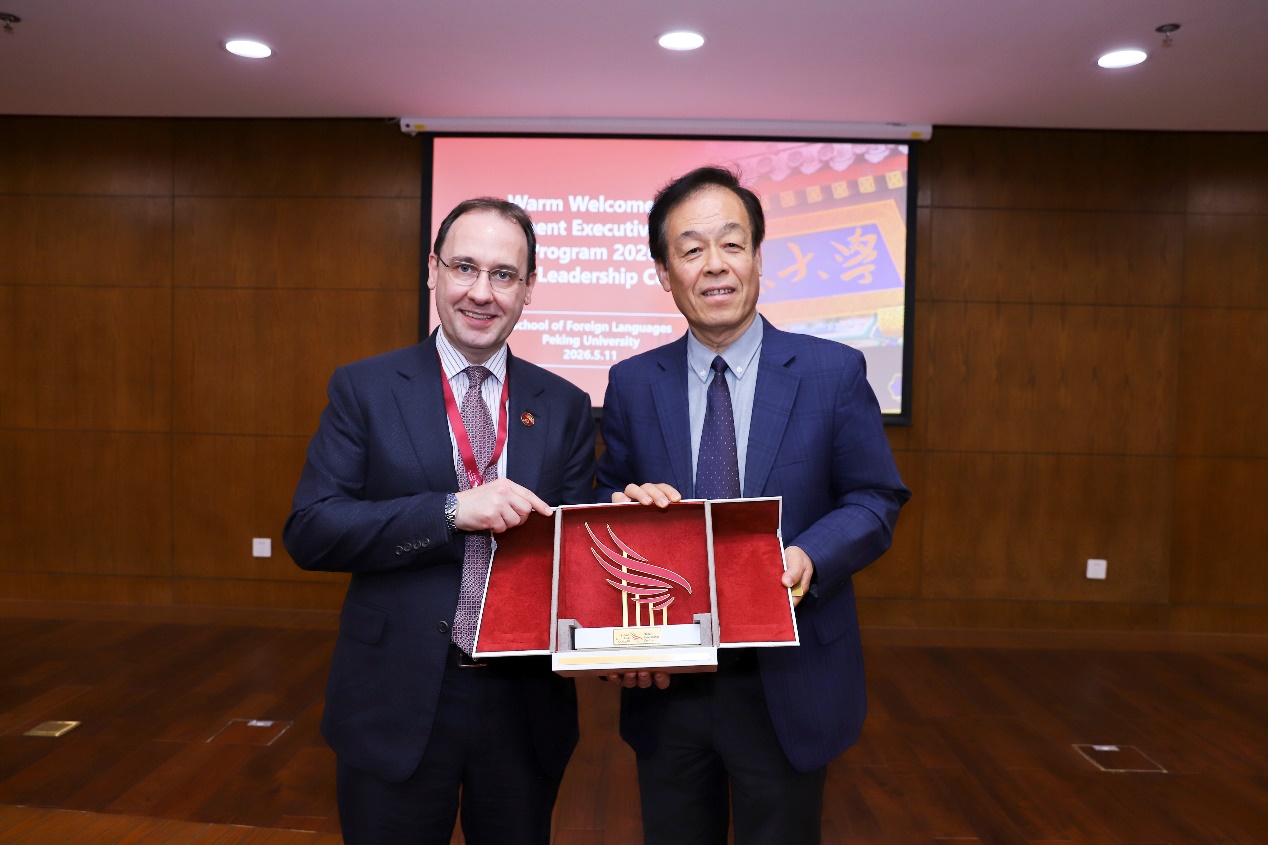
In the end, Professor Fu Zhiming and Mr. Steven Wright exchanged gifts, expressing their shared anticipation for developing pragmatic cooperation, enhancing academic communication, and sharing governance experiences. The symposium concluded successfully amidst a warm, friendly, and productive atmosphere.
Written by: the Department of Arabic Language and Cultures of Peking University
Translated by: Qu Sizhe