Profile
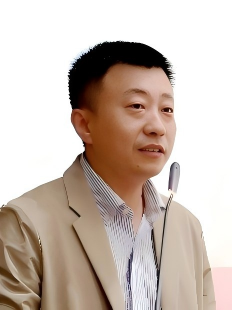
Liu Yingjun is currently an associate professor with tenure at the School of Foreign Languages, Peking University in China. He received his BA, MA and PhD in Persian literature at Peking University. From 2015 to 2017, he did his post-doctoral research in the Department of History, Peking University. His research focuses on classical Persian literature, with particular attention to Iranian epic traditions and Sino–Iranian cultural exchanges. His publications include twenty research papers in Chinese, English, and Persian, as well as a monograph entitled Wenxue dui minzu jiyi de chonggou: Yilang shishi Kushiwangji yanjiu (The Role of Literature in the Reconstruction of National Memory: A Research on the Iranian Epic Kūshnāma) in Chinese.
Educational Experience
Jul. 2015, Ph.D. in Asian and African Languages and Literatures, School of Foreign Languages, Peking University
Jul. 2003, M.A. in Asian and African Languages and Literatures, School of Foreign Languages, Peking University
Jul. 2000, B.A. in Persian Language and Literature, School of Foreign Languages, Peking University
Work Experience
Feb. 2024 till now, Chair of the Department of West Asian Languages and Cultures, School of Foreign Languages, Peking University
Feb. 2024 till now, Associate Professor with tenure, School of Foreign Languages, Peking University
Jul. 2020–Feb. 2024, Associate Chair of the Department of West Asian Languages and Cultures, School of Foreign Languages, Peking University
Aug. 2018–Feb. 2024, Director of Persian Language and Literature programs, Department of West Asian Languages and Cultures, School of Foreign Languages, Peking University
Aug. 2017–Jan. 2024, Assistant Professor, School of Foreign Languages, Peking University
Jul. 2015–Aug. 2017, Post-doctoral research fellow, Department of History, Peking University
Research Interests
Classical Persian literature
Iranian epic traditions
Sino–Iranian cultural exchanges
Teaching Courses
Basic Persian Language
Persian Listening and Speaking
Persian Language for Grad Students
Selected Readings of Persian Poetry
Introduction to Iranian History and Civilization
History of Persian literature
Selected Publications
Monograph
The Role of Literature in the Reconstruction of National Memory: A Research on the Iranian Epic Kūshnāma, Shanghai: Zhongxi Book Company, 2021. (In Chinese)
Articles
1.“On the Concept of ‘Taste’ in Persian Classical Poetics in Relation to the ‘Eastern Taste Poetics’” Waiguo wenxue pinglun [Foreign Literature Review] 154, no. 2 (2025): 220–239. (In Chinese)
2.“Persian Epics and History Writing: A History of Engagement, Disengagement, and Reengagement,” in Kuawenhua duihua [Dialogue Transculturel], eds. Yue Daiyun and Li Bixiong (Alain Le Pichon), 281–300, Beijing: The Commercial Press, 2023. (In Chinese)
3.“Cross-Cultural Exchange in Persian Epics: Narration and Attribution through Four Classics Composed between the 11th and the 12th Centuries,” Xibei minzu yanjiu [Journal of Northwestern Ethnic Studies] 120, no. 3 (2023): 107–120. (In Chinese)
4.“Kūshnāma va naqsh-i qahramān-i bīgāna-yi ‘āmāj-gūna’ dar bāzsāzī-yi huviyyat-i millī-yi Īrāniyān” [On the Role of the Exotic Hero of Archery Target Type in the Kūshnāma in Reconstructing Iranian National Identity], Matnpazhūhī-yi adabī [Literary Text Research] 95, vol. 27, no. 1 (2023): 347–377. (In Persian)
5.“The Spread of the Motif of ‘Fine Horse Coming from Water’ in Ancient Asia: An Investigation Based on Ancient Chinese and Perso-Arabic Sources,” Xiyu yanjiu [The Western Regions Studies] 125, no. 1 (2022): 138–150. (In Chinese)
6.“Bāztāb-i masīr-hā-yi tijārat-i bāstān dar Kūshnāma” [Projections of Ancient Trade Routes in the Kūshnāma], Muṭāliʿāt-i Īrānī-yi Islāmī [International Journal of Iranian-Islamic Studies], vol 11, no. 2 (2021): 1–29. (In Persian)
7.“Zoroastrian Culture as Inherited by and Transmitted in Persian Epics: A Case Study on the Shāhnāma and the Kūshnāma,” Shijie zongjiao wenhua [The World Religious Cultures] 120, no. 6 (2019): 65–72. (In Chinese)
8.“Fabulous Horses out of Water in B.sīlā as Depicted in the Kūshnāma: A Cultural Encounter between East and West Asia”, Acta Via Serica, vol. 4, no. 1 (2019): 87–109. Collected in Korea and The Muslim World: Historical and Cultural Encounters, Sources and Studies on the History of Islamic Civilization Series, 41, ed. IRCICA (Research Centre for Islamic History, Art and Culture of Organization of Islamic Cooperation), 205–236, Istanbul: IRCICA Publication, 2019. (In English)
9.“Possible Connections between Historical Events and the Plots of Iranian Princes Exiled in Chīn and B.sīlā Depicted in the Kūshnāma”, Acta Koreana, vol. 21, no. 1 (2018): 37–63. (In English)
10.“A Comparative Study on Theories of Flavor in Chinese and Persian Classical Poetics,” Guowai wenxue [Foreign Literatures] 149, no. 1 (2018): 47–55. (In Chinese)
11.“The Travel Routes between Ancient Iran and East Asia as Reflected in the Kūshnāma,” Xiyu yanjiu [The Western Regions Studies] 105, no. 1 (2017): 63–75. (In Chinese)
Research Projects
“Research on Sino-Foreign Communication in Persian Epics” (general project supported by the National Social Science Fund of China, no. 19BZS158).
Social Affiliations
Research Fellow at the Institute for Studies of Iranian Culture, Peking University
Research Fellow at the Center for Studies of Eastern Literature, Peking University
Associate Research Fellow at the Research Center for Iranian Studies, Shanghai International Studies University
Honors and Awards
Feb. 2023, Outstanding Scholar for Research and Teaching in Iranian Studies and Iranian Culture Public Outreach, selected by the Iranian Embassy in China
Feb. 2023, The 30th I.R. Iran’s World Book Award (The Role of Literature in the Reconstruction of National Memory: A Research on the Iranian Epic Kūshnāma)
Dec. 2022, New Oriental Junior Scholar of the Year, School of Foreign Languages, Peking University
Sept. 2022, First Prize for Teaching Achievements at Peking University in 2021 (The Belt and Road Initiative Foreign Languages and Culture Course Series run by Fu Zhiming, Li Shujing, Lin Fengmin, Li Tingting, Liu Yingjun, Zheng Fang, Tan Shengfang, Cui Guihong)
Dec. 2021, Shue Yan Fellowship awarded to five teaching faculty members selected across campus, Peking University
Overseas Experience
Mar. 2013–Sept. 2013, visiting doctoral student at University of Bonn, supported by China Scholarship Council